
Commercial Epoxy Flooring: The Ultimate Upgrade for Businesses
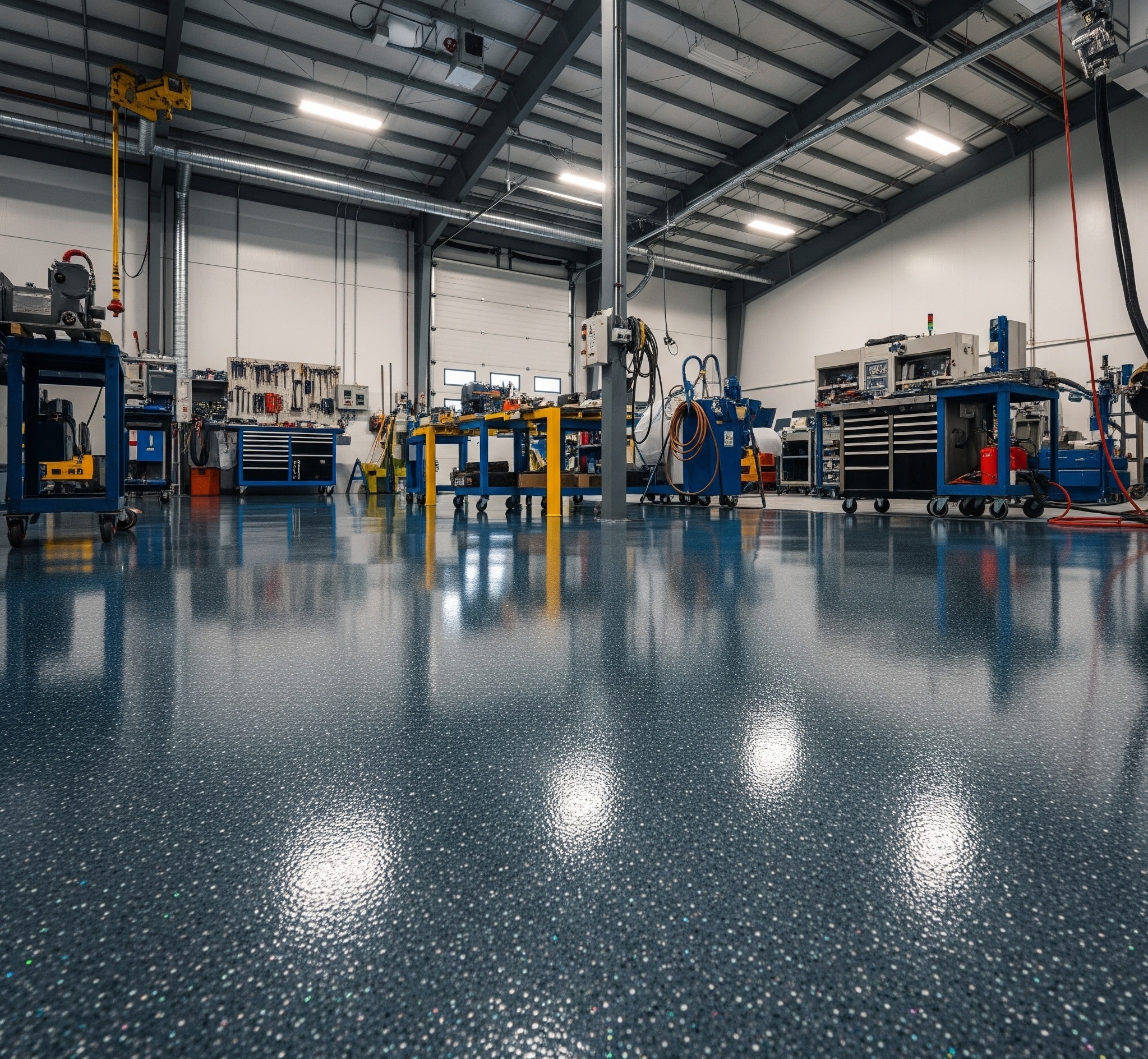
Every business needs a foundation that can keep up with its pace—literally. From bustling retail stores and busy hospitals to industrial warehouses and auto showrooms, commercial spaces endure constant wear. The floors beneath our feet play a quiet yet crucial role in safety, efficiency, and even brand perception. That’s why commercial epoxy flooring has become the gold standard for companies seeking both form and function.
A polished concrete floor coated in a high-performance epoxy isn’t just about aesthetics. It’s about resilience, hygiene, and long-term cost savings. It’s about creating a space that not only looks professional but performs like a pro.
Why Epoxy Coatings Are a Business Essential
Epoxy coatings are more than surface deep. They create a hard, protective layer that bonds with concrete, transforming a porous and vulnerable surface into a seamless, durable powerhouse.
For commercial properties, this transformation is invaluable. Epoxy resists wear from constant foot traffic, machinery movement, and chemical exposure. Unlike traditional tile or bare concrete, epoxy coatings don’t crack, stain, or peel easily. They hold up under pressure—literally and figuratively.
Beyond performance, epoxy offers a sleek and professional appearance that’s easy to customize with color zones, safety markings, or decorative flakes. In Tulsa’s competitive business landscape, a polished workspace speaks volumes about professionalism and care.
Commercial Environments That Benefit from Epoxy Flooring
While garage floor epoxy is well-known in residential settings, its industrial-grade cousin dominates commercial sectors across Tulsa and beyond.
- Warehouses and Distribution Centers: Forklifts, pallets, and heavy equipment are no match for epoxy’s load-bearing strength.
- Medical Facilities: Epoxy’s seamless surface supports stringent hygiene protocols and quick sterilization.
- Restaurants and Food Production: Anti-slip, antimicrobial finishes make epoxy ideal for kitchens and prep areas.
- Retail and Showrooms: With reflective finishes and branding potential, epoxy enhances the customer experience.
- Auto Shops and Dealerships: Resistant to oil, grease, and hot tire pickup, epoxy is a garage’s best friend.
Every industry values durability, but epoxy adds a layer of sophistication and practicality that’s difficult to replicate with other materials.
The Role of Concrete Resurfacing in Epoxy Installation
Durability begins at the base. Before any epoxy can be applied, the surface must be clean, level, and structurally sound. That’s where Concrete Resurfacing enters the equation.
Old or damaged concrete doesn’t need to be replaced. Instead, resurfacing fills cracks, smooths imperfections, and levels out the floor. This process creates the perfect foundation for epoxy to adhere properly and perform to its fullest.
For older buildings in Tulsa’s historic commercial districts or high-use spaces with visible damage, resurfacing breathes new life into worn-out floors without the cost and disruption of total replacement.
Concrete Sealing: A Secondary Line of Defense
While epoxy provides exceptional surface strength, some areas may benefit from or require Concrete Sealing either as a standalone solution or as a topcoat enhancement.
Sealing protects against water penetration, stains, and UV damage. It’s ideal for loading docks, sidewalks, and spaces exposed to the elements. Sealed concrete maintains a natural matte or gloss finish and prevents erosion or salt damage—particularly useful during Oklahoma’s unpredictable winters.
When paired with epoxy, sealants can also enhance durability, improve slip resistance, and boost surface shine.
Why Epoxy Outperforms Other Commercial Flooring
Epoxy coatings outperform alternatives like vinyl, linoleum, bare concrete, and even tile in key areas:
- Longevity: Epoxy floors last 10–20 years with proper maintenance.
- Load Resistance: Handles forklifts, carts, and foot traffic without cracking or peeling.
- Chemical & Stain Resistance: Fights back against spills, oils, and industrial solvents.
- Hygiene: Non-porous and seamless, reducing the risk of bacteria buildup.
- Safety: Can include anti-slip additives, line markings, and fire-resistant properties.
- Visual Appeal: Available in a range of textures, patterns, and finishes—from high-gloss to industrial matte.
Tulsa businesses that rely on functionality and cleanliness can count on epoxy to deliver, all while offering a professional and branded aesthetic.
The Financial Advantage of Epoxy Flooring
Cost-effectiveness is one of the most compelling reasons businesses choose epoxy.
While upfront installation costs may be slightly higher than traditional flooring, the longevity and reduced maintenance more than offset the investment. Epoxy doesn’t require frequent waxing, stripping, or replacement, reducing downtime and operational disruption.
Its durability also minimizes repair costs and safety risks, protecting both the building and the people inside it. In the long run, epoxy delivers real value through savings and performance.
Tulsa’s Epoxy Experts: Precision That Pays Off
Installing epoxy isn’t a weekend DIY job—it’s a craft. At Epoxy Flooring Tulsa, each project begins with meticulous surface preparation, including grinding, patching, and moisture testing. The result? Long-lasting adhesion and flawless finishes.
From commercial epoxy flooring for industrial parks to garage floor epoxy in auto repair shops, we understand how to tailor each installation to the client’s needs. Whether it’s performance, style, safety, or all three, we deliver a solution that works as hard as your business does.
Our local team knows Tulsa’s climate, construction quirks, and commercial codes—ensuring that your floor is as compliant as it is beautiful.
Conclusion: Upgrade Your Foundation, Elevate Your Business
Your floor is more than just a surface. It’s the stage on which your business performs every day. With epoxy coatings, concrete resurfacing, and concrete sealing, you gain a foundation built for resilience, hygiene, and visual impact.
Tulsa businesses that invest in commercial epoxy flooring aren’t just improving appearance—they’re optimizing workflow, minimizing maintenance, and future-proofing their operations.
Strong, seamless, and stunning—epoxy isn’t just a coating. It’s a business upgrade.
Frequently Asked Questions
How long does commercial epoxy flooring last?
With proper prep and maintenance, commercial epoxy floors can last 10 to 20 years. High-traffic areas may experience more wear, but touch-ups are easy.
Is epoxy safe for food production areas?
Yes. Epoxy can be formulated to be antimicrobial and slip-resistant, making it ideal for food prep spaces and kitchens that require hygienic surfaces.
Can epoxy be applied over old concrete?
Yes. However, concrete resurfacing may be needed to repair damage and create a smooth surface for proper epoxy adhesion.
How long does epoxy installation take?
Most commercial projects take 2–5 days depending on size, curing time, and prep work. Downtime can be minimized with careful scheduling.
Do epoxy floors require sealing?
Epoxy is inherently protective, but some clients opt for additional concrete sealing as a topcoat to enhance gloss and scratch resistance, especially in high-traffic areas.